Cannes Lions 2026: CIO, GWI Says Attention Isn't Declining- It's Fragmenting
GWI’s Jason Mander says attention is fragmenting across platforms as AI adoption, synthetic data and changing search habits reshape marketing.
 by
by
Published: Jun 22, 2026 10:42 PM | 8 min read
 Follow Us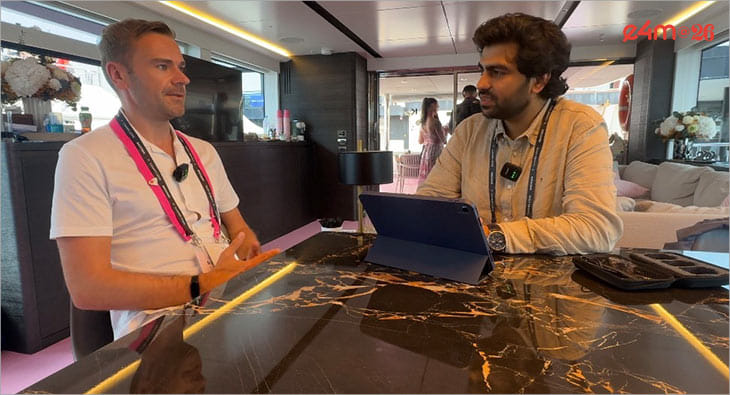

- At Cannes Lions 2026, GWI's Chief Insights Officer Jason Mander emphasized the need for marketers to effectively utilize AI and focus on the quality of foundational data to understand consumers in a fragmented media landscape.
- Mander noted that consumer adoption of AI is occurring at a faster rate than previous technological shifts, with older generations engaging with AI similarly to younger cohorts, unlike past trends with social media and smartphones.
- He highlighted the ongoing challenge for marketers to accurately gather and apply data, as many still struggle with personalization, often presenting irrelevant advertisements to consumers due to poor data quality.
- Mander pointed out that Gen Z's media consumption is evolving, debunking the myth that traditional TV is dead, and stressed the importance for marketers to adapt to the diverse and fragmented media habits of consumers, particularly in India.
This interview was originally published on MartechAI.com
At Cannes Lions 2026, GWI’s Chief Insights Officer Jason Mander spoke to Brij Pahwa, Editorial Lead, MartechAi.com, e4m and BW Businessworld about AI adoption, synthetic data, Gen Z, fragmented media behaviour and why marketers need to focus on the quality of data behind every insight.
At Cannes Lions 2026, AI has continued to dominate industry conversations, but the debate has moved beyond experimentation. For Jason Mander, Chief Insight Officer at GWI, the focus is now on how marketers can use AI effectively, build stronger foundational data, and understand consumers across an increasingly fragmented media landscape.
In a conversation with MartechAI.com, Mander said consumer adoption of AI is happening faster than previous technology shifts, with older generations adopting AI at a pace closer to younger cohorts than was seen with social media or smartphones. He also cautioned that whether marketers are using AI, search tools, synthetic data or simulated insights, the quality of the output will depend on the quality of the data feeding it.
What has been interesting at Cannes Lions this year?
Every year there is a theme. Last year, there was already a lot of conversation around AI, but those conversations have moved on even more. It is now about how to make effective use of AI tooling and how to find efficiencies, rather than adopting it for the sake of it.
There is also a lot of talk about simulated or synthetic data, the promise it can bring, balanced against the challenges that come with it.
GWI’s research says consumers spend nearly seven hours a day online globally, while attention is increasingly fragmented across platforms. Are marketers facing an attention crisis, or is the real challenge that they are not understanding the new consumer?
Consumers have always been fragmented in terms of where they spend their attention. It is just that the places shift.
Right now, we are seeing a proliferation of social and media platforms. The average consumer is on seven or eight of those, plus all of the other media they consume. For marketers, the challenge is understanding where consumers are and how to show up authentically and in a relevant way.
People go to different social platforms for different reasons. What they expect from Instagram versus TikTok versus Snap or any other platform is a little different. Consumers generally do not mind a brand showing up there, but it needs to be in a way that adds value, is relevant, and brings them some value.
That challenge has not changed. The places where that challenge is playing out continue to shift.
Consumer behaviour is also changing with AI entering everyday life. Earlier, marketers spoke about SEO and data. Now the conversation has moved to AI optimisation and AI-led discovery. How difficult has it become for marketers to gather data, apply intelligence and make sense of it?
It is a really challenging area, and consumer behaviours are changing very quickly.
Consumer adoption of AI is faster than we have seen for pretty much any previous technology. If you were to look at social media or smartphones by this point, you would see real generational differences. But with AI, Boomers and definitely Gen X are almost at parity with younger generations.
Consumer usage is exploding, but everyone is still figuring it out. Consumers are feeling around for how they want to use it. Marketers are figuring out the best ways to deploy it to actually help.
If you think about the way consumers search for things, fewer are now using the more traditional method that marketers have planned everything around. Many people are going straight to their tool of choice and asking for personalised recommendations for something.
The way marketers spend money to get attention needs to continue evolving. The prominence of AI tools as effective search engine replacements will keep on growing.
Despite so many tools and insights, marketers still get personalisation wrong. For example, one consumer may see ads for both a $10,000 car and a $60,000 car. What is going wrong?
That sounds like the quality of the data is not there.
Consumers can fit into multiple different segments, but in that example, something is not quite right in the source data. Regardless of whether you are using AI, search tools or anything else, you have to consider the data flowing into it.
Does it really understand the humans it is trying to represent? How is that data collected, sourced and quality checked?
Whether we are talking about AI outputs generally, or synthetic and simulated insights in the future, they are only as good as the data feeding them.
What is the most misunderstood thing about Gen Z as consumers?
The biggest misunderstandings about Gen Z come from people conflating them with life stage, spending power, or the idea that they are just people in their 20s doing what people do at that time of life.
If you rewind 10 to 15 years, Millennials were seen as the smartphone generation because they were the earliest and first to really seize smartphones. We are seeing something similar with Gen Z and AI. They are the earliest and fastest adopters of AI, but that does not mean they are the AI generation.
This year, Gen Z are between 17 and 29 years of age. How coherent is that group of people? What connects a single 17-year-old living at home with parents and still in full-time education with a 29-year-old who is married, has become a parent, is in full-time employment and has their own property?
There may be commonalities, but often Gen Z also share commonalities with Millennials, Gen Alpha or even Boomers. Starting with attitude, mindset or interest is a far better way to identify coherent audiences. In many ways, Gen Z do not exist in the way we have stereotypically created them.
Find a more powerful way to segment them, and then overlay generation when you want to think about how to reach them where they hang out.
As Chief Insights Officer, what is one insight from the last year that surprised you?
There are some countries around the world where people are spending 15 to 20 hours a day online. Some of that is happening concurrently, such as streaming music while scrolling social, but it shows the amount of attention that is up for grabs.
A good example is the idea that traditional TV or linear TV is dead among Gen Z. The data does not support that. It is to do with life stage first and foremost. As many Gen Z consumers move out and get their own properties, they are moving back to consuming via television.
But the definition of TV is changing. For that generation, TV is not just linear or broadcast in the way it may have been for previous cohorts. They are consuming a rich cocktail of content, from YouTube to streaming services to broadcast TV.
Among that generation, time spent watching content on an actual big TV screen is going up year on year. The definition of what they are watching needs to keep changing.
TV is not dead. It is just changing.
For Indian marketers, what global consumer trend should India pay close attention to?
The fragmentation of media among Indian consumers is one of the most intense. India ranks as one of the top countries for the number of different social and messaging services being consumed.
That is partly because global players are popular in India, but local messaging services and apps have also come to prominence. In that context, marketers need to think carefully about how they distribute media spend across the complex ecosystem of services Indian consumers are using.
What is one AI conversation at Cannes Lions that excites you?
It is refreshing to hear a lot of people admitting that they have not got it right.
There is the promise of what can be achieved, but many people are encountering problems and challenges in creating effective synthetic or simulated data. What has been refreshing this year is hearing so many people talk about the need for proper foundational data.
The quality of your outputs will only be as good as the quality of the data it is built on.
Rapid Fire
One consumer trend marketers are overestimating?
The World Cup.
One consumer trend marketers are underestimating?
The shift of search behaviours. We are aware of it, but not to the full extent that we need to be.
One platform marketers misunderstand a lot?
TikTok.
One thing consumers will never outsource to AI?
Proper recommendations.
One metric marketers should focus on more?
It is not just eyeballs. It is whether those eyeballs are paying attention.
One brand that understands its consumer really well?
Apple.
One prediction for consumer behaviour in 2030?
Even more time spent on favourite devices. People think it cannot go up, but it always does.
If you were not Chief Insights Officer at GWI, what would you be doing?
In a previous life, I was an archaeologist, so maybe I would still be doing that.
Read more news about Marketing News, Advertising News, PR and Corporate Communication News, Digital News, People Movement News
For more updates, be socially connected with us onInstagram, LinkedIn, Twitter, Facebook, YouTube & Google News